



FlyNava Insights
Insights and perspectives on airline pricing, revenue management, AI and continuous pricing.
How Wars and Geopolitical Tensions Impact Airline Pricing
How conflict reshapes airfares. A quick look at how wars impact fuel, routes, insurance, and what airlines do to stay ahead.
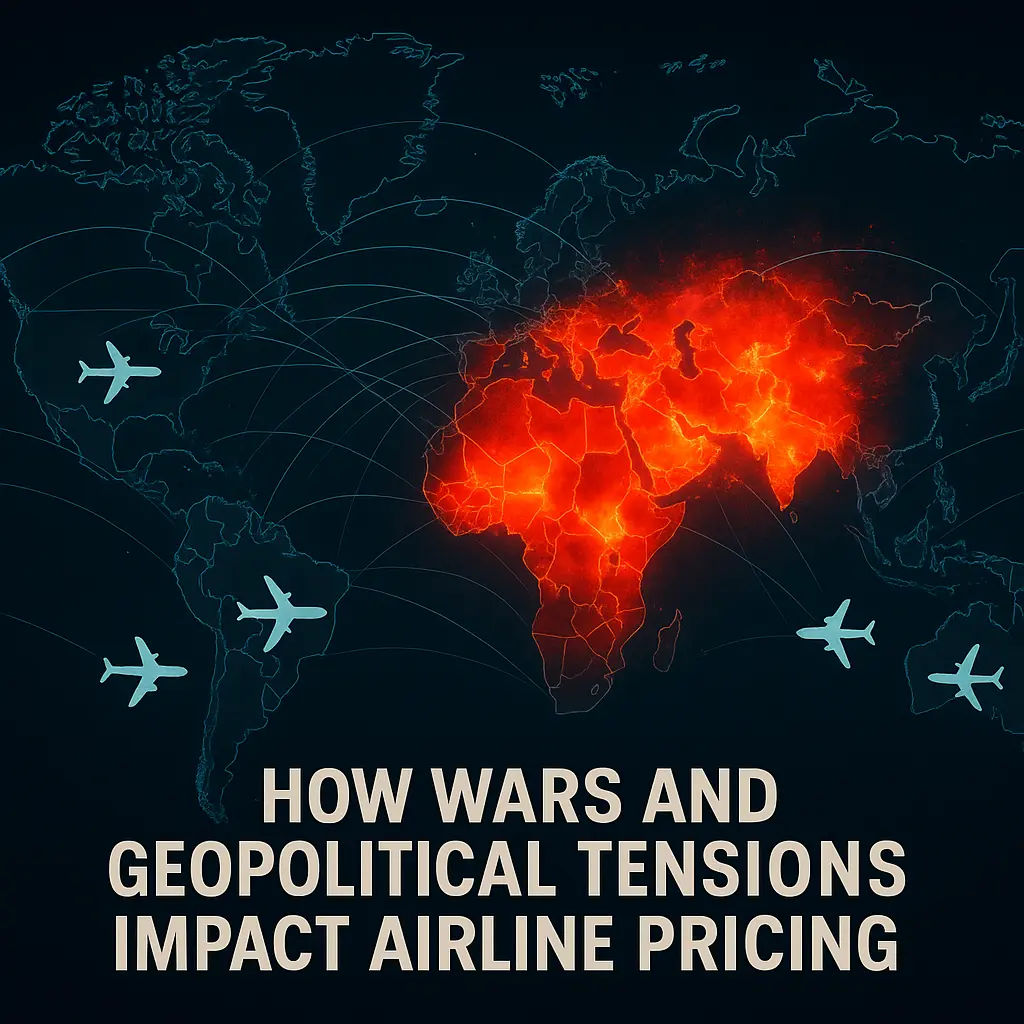
Global conflict and geopolitical tensions significantly impact the aviation industry, influencing both operational efficiency and airline pricing strategies. Events such as airspace closures, spikes in jet aviation fuel prices, and rising aviation insurance war risk create volatility that airlines must manage with agility. These disruptions often lead to longer flight paths, increased fuel consumption, and scheduling complexities—pushing up the overall price of aviation fuel and affecting fare structures across markets. As demand shifts due to traveller uncertainty and capacity constraints, airlines are forced to reevaluate pricing models to remain competitive. This article explores how wars and geopolitical instability broadly affect aviation pricing worldwide, and how airlines can adapt using intelligent, real-time decision-making tools. Major impacts of war on airline pricing include:
- Fuel price spikes: Conflict often disrupts oil supply and raises the price of aviation fuel, driving up jet aviation fuel prices globally.
- Airspace closures and detours: War zones prompt airspace closure and no-fly zones, forcing longer routes that increase fuel burn and crew costs.
- Insurance and security costs: Aviation war-risk insurance premiums soar in conflict regions, and airlines incur higher security and operational costs.
- Demand fluctuations: Traveler confidence can dip during conflicts, reducing demand on certain routes and pressuring airlines to adjust fares.
I. Fuel Prices Soaring in Times of Conflict
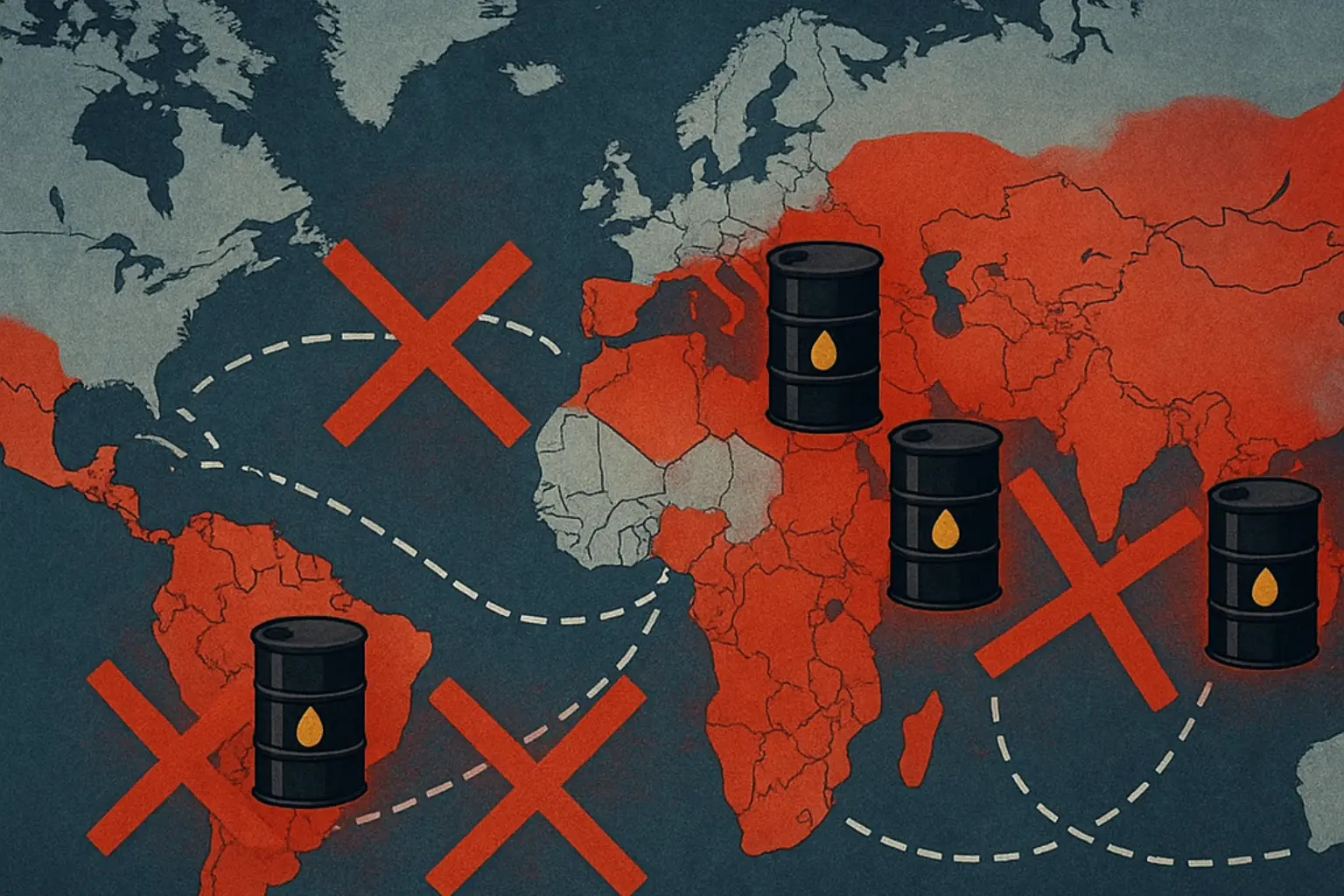
Fuel is one of the biggest costs for airlines—and conflict makes it worse. During time of geopolitical tensions, jet aviation fuel prices can surge rapidly, sometimes rising over 35% within weeks. Since fuel accounts for about 25% of operating costs, these spikes put heavy pressure on airline margins.
To manage this, airlines often raise fares or add surcharges, though some try to absorb the costs—tightening already slim margins. In high-inflation environments, fare hikes risk dampening demand, requiring pricing teams to strike a careful balance.
II. War Redraws the Sky—and the Balance Sheet
Conflicts don’t just raise costs—they reshape flight paths. One of the first impacts of war is airspace closure, forcing airlines to cancel or re-route flights. These longer detours lead to increased fuel burn, extended crew hours, and higher operational costs.
On some long-haul routes, average flight times have risen by up to 7%, affecting millions of flights and costing the industry an estimated $2.25 billion annually in extra fuel and operations. This isn’t limited to one region—airspace restrictions across multiple conflict zones have led to widespread route changes, with each extra mile flown adding to costs that eventually push ticket prices higher..
III. Geopolitical Tensions, War-Risk Insurance, and Rising Operating Costs
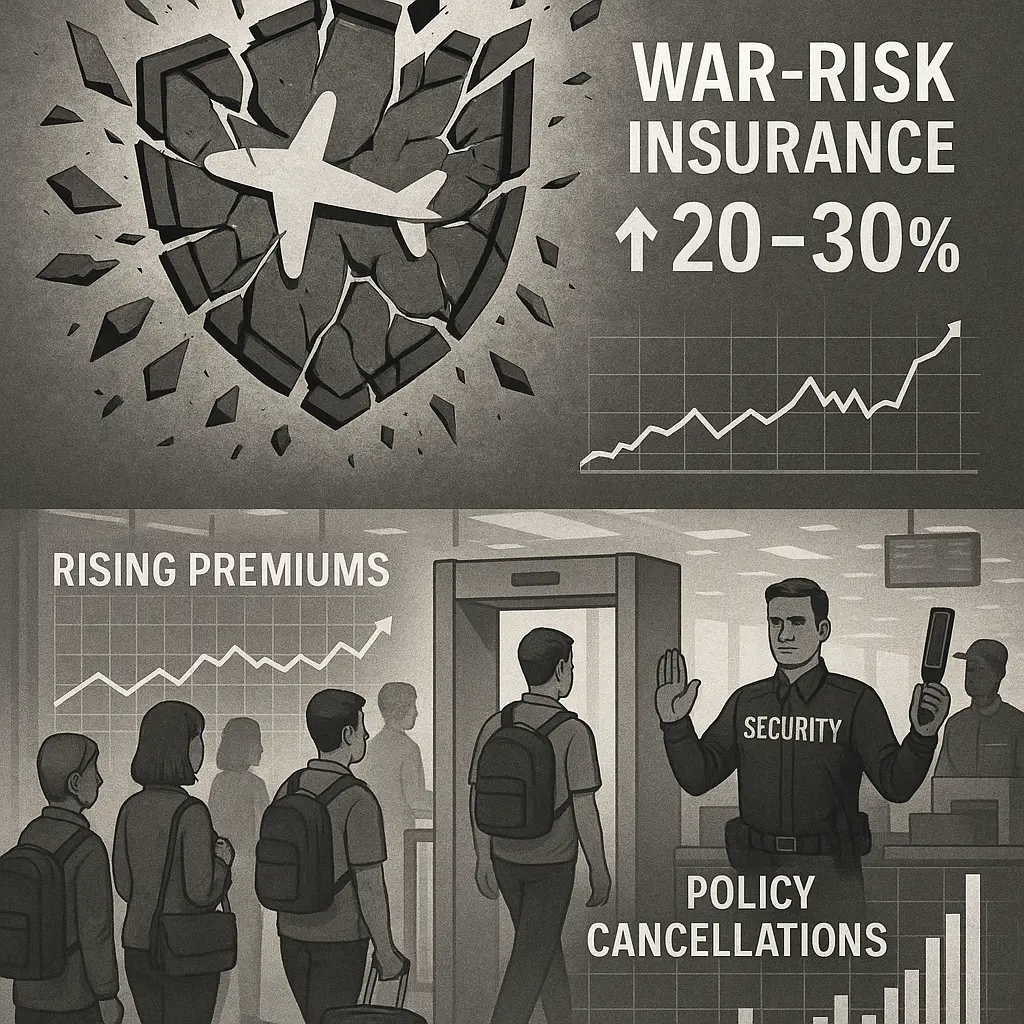
Wars make flying riskier—and more expensive. In high-conflict zones, war-risk insurance premiums can rise by 20–30%, with some insurers even cancelling coverage on short notice. Globally, this has
led to higher insurance costs and reduced coverage options for airlines, especially during periods of heightened geopolitical tensions.
Additional costs—from rerouted flights and crew protection to fuel hedging challenges and rising airport fees—further inflate operational expenses. These increases are often passed on through higher fares or cargo rates, putting pressure on both margins and demand.
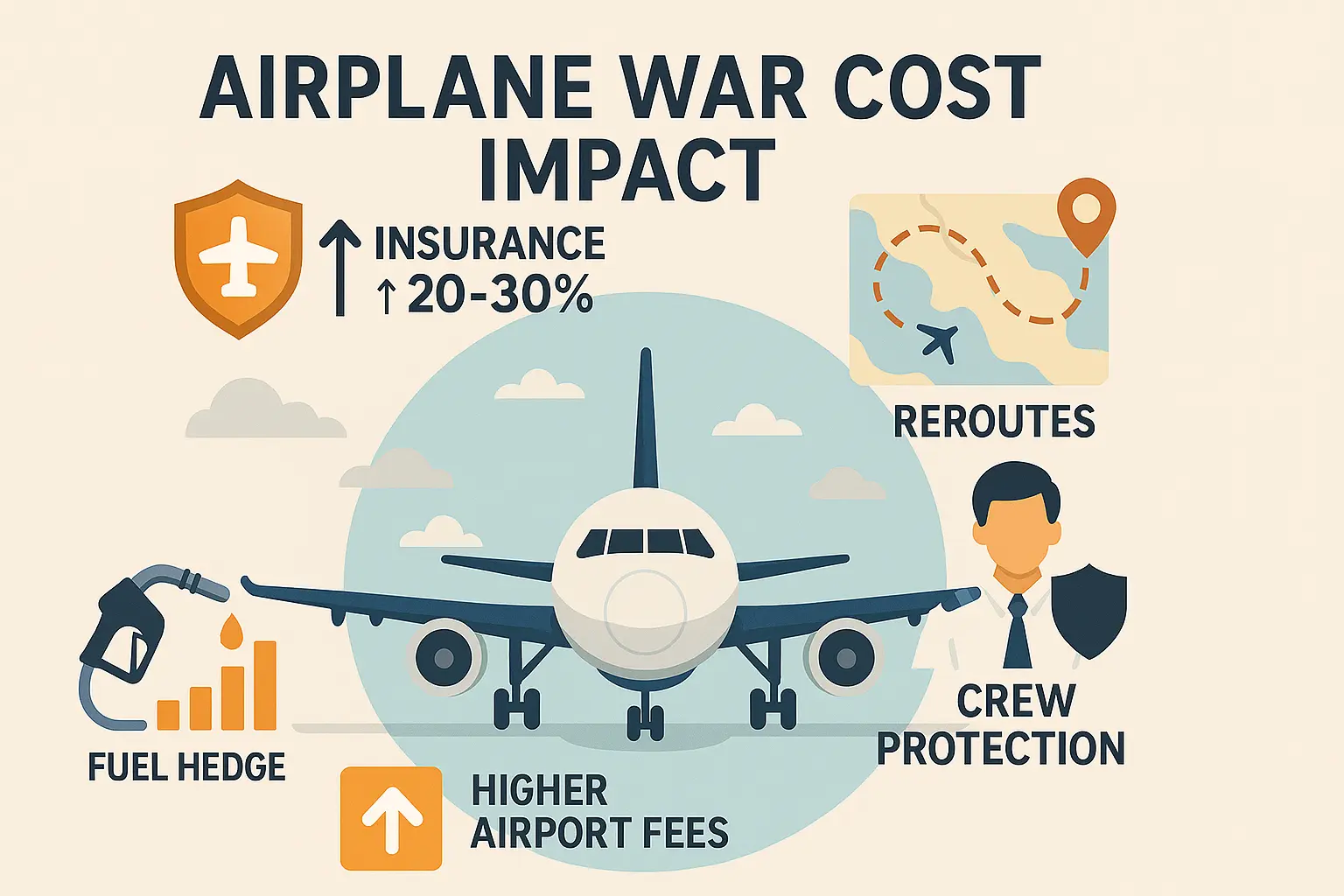
Wars make flying riskier—and more expensive. In high-conflict zones, war-risk insurance premiums can rise by 20–30%, with some insurers even cancelling coverage on short notice. Globally, this has led to higher insurance costs and reduced coverage options for airlines.
Additional costs—from rerouted flights and crew protection to fuel hedging challenges and rising airport fees—further inflate operational expenses. These increases are often passed on through higher fares or cargo rates, putting pressure on both margins and demand.
IV. Demand Shocks and Fare Adjustments
War doesn’t just raise costs—it changes travel behaviour. Leisure travel tends to decline near conflict zones, and businesses often cut back on corporate travel. This drop in demand can force airlines to lower fares to attract passengers—or raise prices when reduced capacity creates scarcity.
In conflict-affected markets, airlines may suspend routes, offer discounts, or adjust load strategies. When competitors withdraw, limited supply can push fares up for essential travellers. Airlines have also introduced war surcharges to offset rising costs from insurance and fuel.
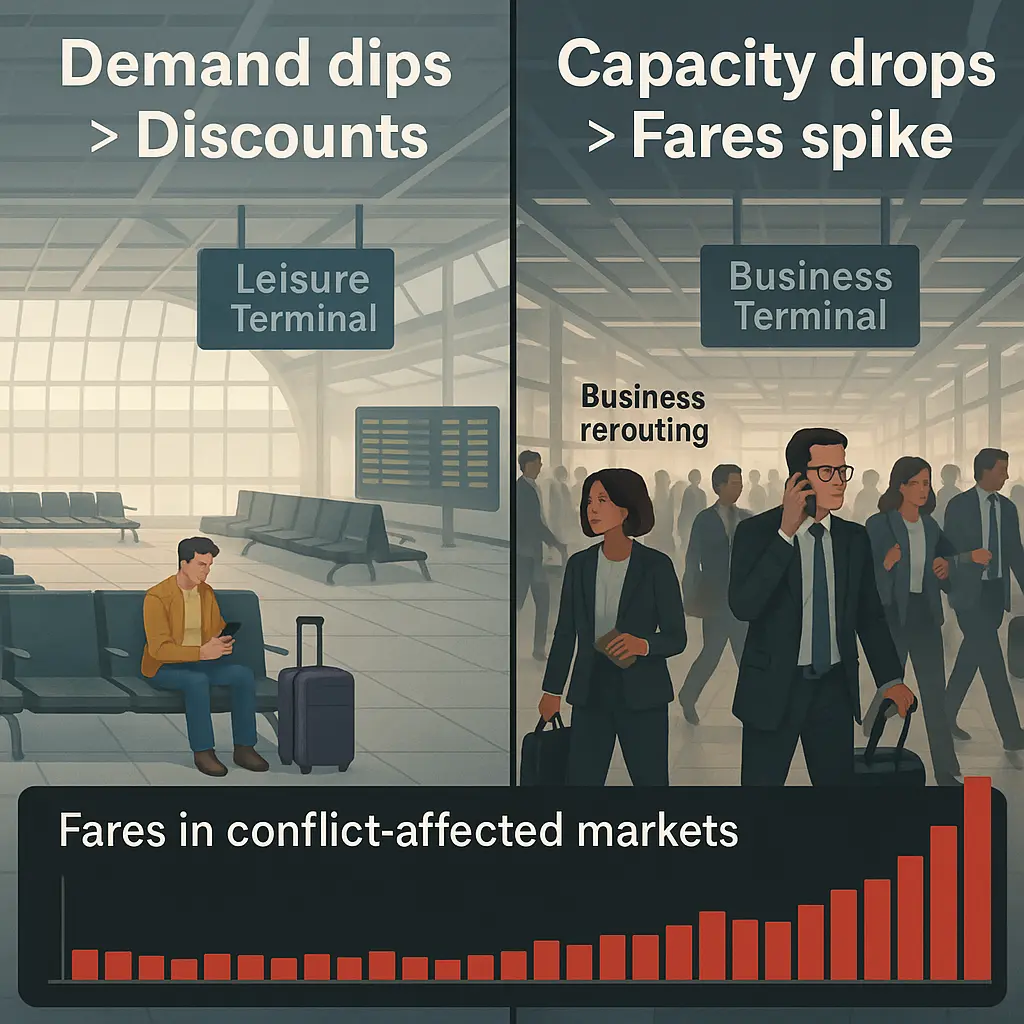
In short, war leads to volatile fare patterns. Pricing teams must stay agile—closely tracking demand, competitor moves, and passenger sentiment to make timely, data-driven decisions.
V. Data-Driven Resilience: Leveraging AI in Pricing Strategy
In these turbulent times, agility and intelligence in pricing are more essential than ever. The right data can make the difference between mitigating the impact of conflict or suffering heavy losses.
AI-powered systems help airlines adapt quickly to disruptions like airspace closures or fuel price spikes, enabling real-time adjustments in pricing and operations. By harnessing live data and intelligent algorithms, airlines gain the clarity and speed needed to respond effectively to geopolitical shifts.
Geopolitical tensions often lead to sudden disruptions in airline operations, forcing carriers to adjust pricing strategies in real time. At FlyNava Technologies, we’ve reimagined how airline pricing teams respond to this kind of market volatility. Jupiter, our AI-powered pricing engine, brings together real-time intelligence, automation, and strategic adaptability—so airlines can make smarter decisions, faster. With dynamic competitor fare tracking, contextual market insights, and proactive recommendations from INAYA, our intelligent assistant, Jupiter transforms complex pricing challenges into clear, data-driven actions.
When disruption hits, Jupiter can suggest actionable pricing strategies within minutes. Its modular tools—including the Web Fares Dashboard and Events Dashboard—enable teams to track trends, evaluate route-level profitability, and stay aligned across markets.
Unlike slow, manual workflows or opaque algorithms, Jupiter offers transparent, data-rich insights, helping teams reduce inefficiencies, collaborate better, and respond to market changes with agility.
Wars will continue to disrupt aviation, but airlines can stay resilient. With Gen AI-powered platforms like Jupiter, they can proactively adjust fares, reroute efficiently, and uncover new revenue opportunities—even in unstable conditions.
In short, real-time intelligence isn’t just useful—it’s mission-critical. With Jupiter, airlines are better equipped to handle uncertainty and thrive in a rapidly shifting global landscape.
See Jupiter on your own markets.
Talk to our team about what this means for your network.